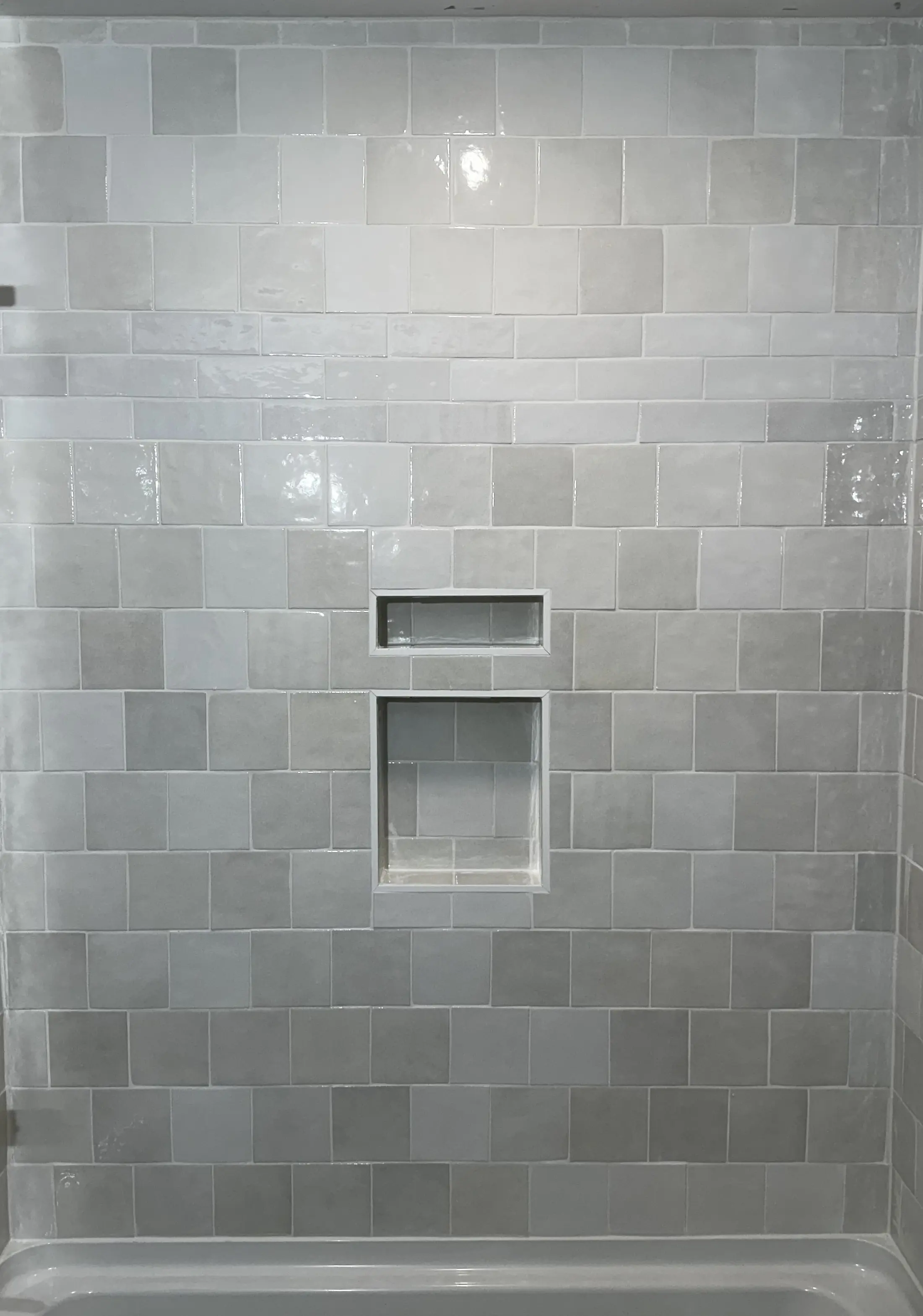
Stand in any tile showroom and you'll see three options that look surprisingly alike: ceramic, porcelain, and natural stone. They can sit side by side at similar prices and fool the eye completely. But once they're on your shower wall or bathroom floor, the differences show up fast — in how they handle water, how long they last, and how much upkeep they demand.
We install all three every week. Here's how we'd explain the trade-offs to a friend deciding what goes in their bathroom.
Ceramic: the practical choice
Ceramic is made from clay, fired, and glazed. It's the most budget-friendly of the three and comes in nearly endless colors and styles. It's a little softer and more porous than porcelain, which makes it easier to cut and install — but also a bit less suited to constant moisture.
- Best for: bathroom walls, backsplashes, and lower-traffic floors
- Strengths: affordable, huge style range, easy to work with
- Watch out for: more water absorption than porcelain; can chip more easily
Porcelain: the workhorse
Porcelain is a denser, tougher cousin of ceramic — fired hotter and made from finer clay, so it absorbs almost no water. That's why it's our go-to for shower floors, wet areas, and high-traffic bathroom floors. Modern porcelain can also convincingly mimic marble, wood, or concrete, giving you the stone look without the stone upkeep.
- Best for: shower floors and walls, bathroom floors, anywhere wet
- Strengths: extremely water-resistant, hard, durable, low maintenance
- Watch out for: harder to cut, so install labor runs a bit higher
Natural stone: the showstopper
Marble, travertine, slate, and granite bring a depth and character no manufactured tile fully replicates — every piece is one of a kind, and it adds real perceived value to a home. The trade-off is maintenance: stone is porous, so it needs sealing when installed and periodically afterward to resist water and stains. For homeowners who love the look and don't mind the care, nothing else compares.
- Best for: feature walls, vanity tops, statement floors, luxury showers
- Strengths: unmatched beauty, unique character, adds value
- Watch out for: needs sealing and upkeep; higher material and labor cost
The short version: porcelain where it's wet, ceramic where you want value and style, and natural stone where you want a showpiece and don't mind the upkeep. Not sure which fits your bathroom? We'll bring samples and walk through it with you. Call (919) 698-4382 for a free estimate.
How they compare at a glance
If you remember nothing else, remember this ranking:
- Water resistance: porcelain wins, ceramic is solid, stone needs sealing to keep up
- Durability: porcelain is hardest, stone is strong but needs care, ceramic is good for its price
- Cost: ceramic is most affordable, porcelain sits in the middle, stone is the premium tier
- Maintenance: porcelain and ceramic are easy; stone asks for periodic sealing
- Looks: all three can be stunning — stone for character, porcelain for stone-look versatility, ceramic for color and pattern
What we'd actually recommend
For most Triangle bathrooms, a mix is the smart play: porcelain on the shower floor and any wet zones where performance matters most, ceramic on the walls where you want style without the premium, and a touch of natural stone as an accent if you want a wow moment. The right combination depends on your space, your budget, and how much upkeep you're up for — which is exactly the kind of thing we sort out, with samples in hand, during a free in-home estimate.
Still deciding?
We'll bring samples, talk through your space, and help you choose. Free in-home estimates across Raleigh, Durham & the Triangle. Lifetime warranty on every install.